
Incoterms: Clarity in International Trade

Kevin
Chief Business Development Officer
Apr 24, 2024
Doing business always involves risk, especially when your trading partner is on the other side of the world. Damage, loss, delays… You don’t want to leave these matters vague or open to interpretation. That’s why Incoterms exist: to make international agreements crystal clear.
What are Incoterms?
Incoterms are standard delivery terms created by the International Chamber of Commerce (ICC). They are included in sales contracts so that everyone involved—buyer, seller, carrier—knows their rights and obligations.
These rules define:
Who handles insurance, permits, and formalities
Who arranges and pays for transport
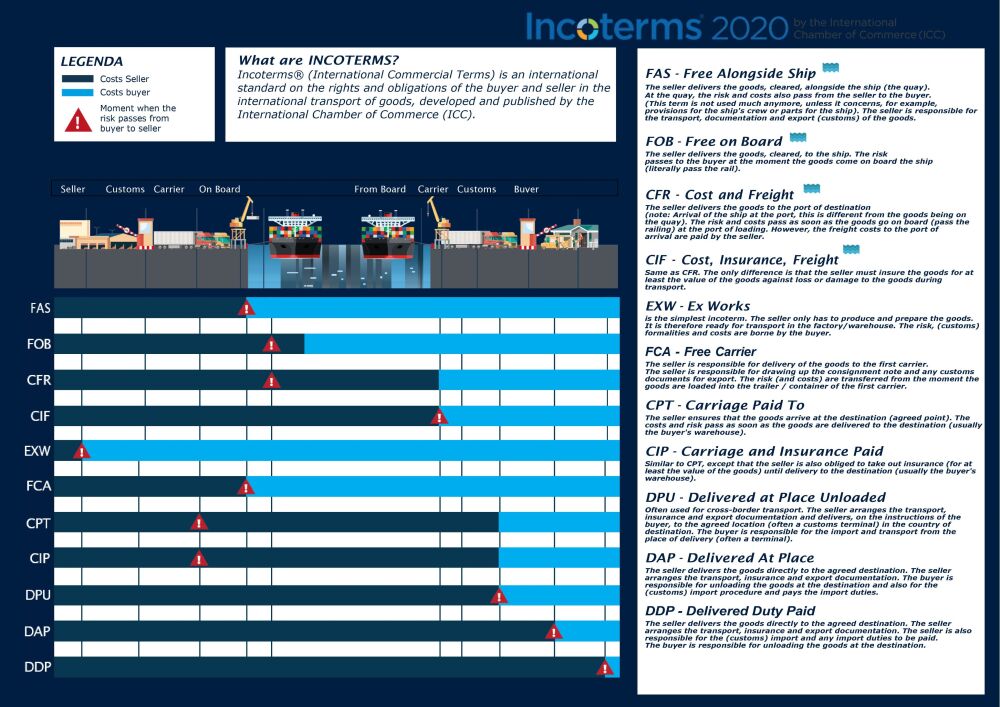
When costs and risks transfer from seller to buyer
Because they’re used worldwide and available in multiple languages, Incoterms create clarity, reduce misunderstandings, and limit risk. The most recent update took effect in 2020, and the ICC revises them every ten years to keep them in line with real-world trade practices.
Types of Incoterms
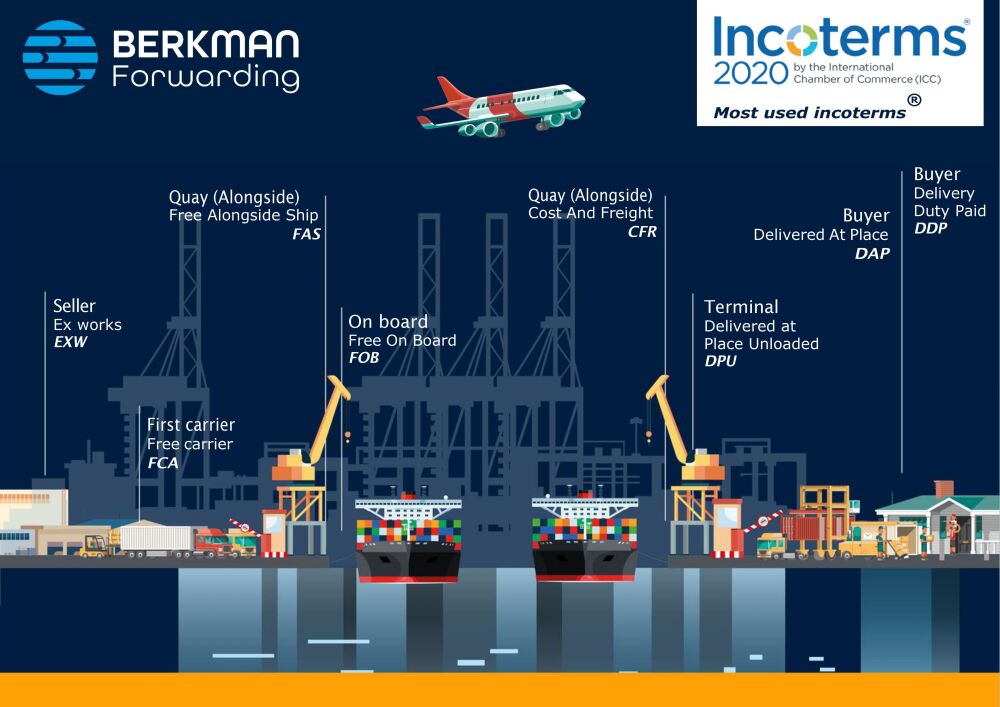
Incoterms apply to all forms of transport, but there’s also a specific set for sea and inland waterways. Broadly, they’re divided into four categories—often referred to as the EFCD conditions:
E-terms: Buyer takes on almost all responsibility (e.g. EXW – Ex Works)
F-terms: Seller delivers goods to a carrier chosen by the buyer
C-terms: Seller arranges transport but not risk (e.g. CIF – Cost, Insurance & Freight)
D-terms: Seller bears most costs and risks until delivery at destination (e.g. DDP – Delivered Duty Paid)
How to choose the right Incoterm
Not sure which term to use? Ask yourself three key questions:
How will the goods be transported?
What is my relationship with the other party?
How much control do I want over the shipment?
It's advisable to specify the exact location (loading place, port, terminal) to avoid ambiguity.
Are Incoterms legally binding?
Here’s the important part: Incoterms themselves are not laws. But once included in a sales contract, they become binding. You can deviate from the standard terms, but these adjustments must be clearly documented and agreed upon.
One thing to watch out for: Incoterms do not deal with the transfer of ownership. That must always be separately specified in your contract.
Incoterms are not just a formality—they are a practical tool to reduce risk and create clarity in international trade. Using them properly means fewer surprises, smoother logistics, and stronger partnerships.
Need advice on Incoterms?
If you’ve never dealt with exporting or importing before, or even if you’ve been doing it for years, you'll find that choosing the right Incoterm can be tricky.
The good news? This is exactly where we shine. At Berkman Forwarding, our experts are ready to guide you through the options and help you select the delivery terms that best fit your shipment. Clear advice, practical solutions, and peace of mind, so you can focus on doing business.


Related blogs

Why Quality Control Is Essential For Your Imports

The Advantages of Container Transport by Barge

Consolidation: A Skill You Can Master!

Shipping Containers 101: More Than Just a Metal Box

LCL Shipments: Advantages and Disadvantages Explained

10 Frequently Asked Questions in Logistics

Train Transportation: The Middle Ground Between Sea and Air

Air Freight: Key Advantages and When It’s the Right Choice

Import Basics: How to Get Started
